Colorado is a great place to drive. One day you might be commuting across Boulder, and the next you are climbing into the foothills for a weekend away. But all that variety comes with something your
suspension does not necessarily appreciate: changing road surfaces, potholes, elevation changes, winter conditions, and plenty of uneven pavement.
Your suspension system absorbs much of that punishment. Shocks, struts, ball joints, control arms, bushings, and other components work together to keep your tires in contact with the road and your vehicle stable. Over thousands of miles, Colorado driving conditions can accelerate wear that is easy to overlook because it develops gradually.
Here is what Boulder drivers should know about suspension wear, including the warning signs that your vehicle may need an inspection.
Why Are Colorado Roads Hard on Your Suspension?
There is rarely one single culprit. Instead, Colorado vehicles experience a combination of conditions that repeatedly load and unload suspension components.
Winter is particularly challenging. Freezing temperatures, snow, ice, and repeated freeze-and-thaw cycles can contribute to cracks and potholes in pavement. A pothole that seems like a minor annoyance from the driver's seat can send a sharp impact through the tire, wheel, steering, and suspension.
Then there are Colorado's mountain roads. Curves, elevation changes, uneven surfaces, and frequent braking place different demands on a vehicle than relatively flat highway driving. Add dirt roads, gravel parking areas, construction zones, and the occasional trailhead access road, and your suspension stays busy.
None of this means Colorado driving automatically ruins a suspension. It does mean that how and where you drive can influence how quickly certain components wear.
Potholes Can Do More Than Make You Spill Your Coffee
Hitting a pothole transfers a sudden force through the wheel and into the suspension. Depending on the size of the pothole, your speed, tire condition, and angle of impact, that force can affect several components.
A hard pothole impact can contribute to bent wheels, tire damage,
alignment changes, worn or damaged suspension components, and steering problems.
Sometimes the change is obvious immediately. Other times, the vehicle simply starts feeling a little different.
If your steering wheel is suddenly off-center or the vehicle begins to pull to one side after hitting a pothole, having the alignment and suspension inspected is a good idea.
How Mountain Driving Affects Your Suspension
Driving into the foothills introduces another type of stress.
Your suspension constantly manages weight transfer as the vehicle accelerates,
brakes, climbs, descends, and turns. Shocks and struts help control that movement, keeping the vehicle stable rather than allowing it to continue to bounce or sway.
As these components wear, you might notice that your car feels less controlled in curves or dips excessively when braking.
That can be especially noticeable on Colorado mountain roads, where predictable handling matters.
Winter Damage Can Show Up Months Later
Not every winter-related problem becomes obvious in January.
By spring and summer, drivers may begin
noticing noises, uneven tire wear, steering changes, or a rougher ride. That is one reason suspension inspections can be valuable after months of winter driving.
Road grime and moisture can also be tough on exposed undercarriage components. Rubber bushings naturally deteriorate with age and mileage, while suspension joints and other components can develop looseness over time.
The result is often gradual rather than dramatic. You may get used to the way the vehicle feels without realizing how much the ride quality has changed.
What Are the Signs of a Worn Suspension?
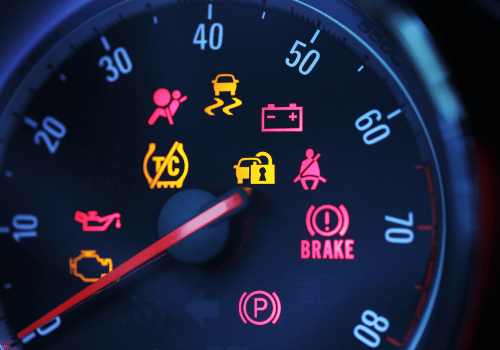
Suspension problems do not always produce a dashboard warning light. Instead, your vehicle often communicates through the way it sounds, steers, and rides.
Common signs of suspension wear include:
- Clunking or knocking over bumps
- Excessive bouncing after hitting a bump
- Pulling to one side
- Uneven or cupped tire wear
- Loose or unstable steering
- Excessive body movement around turns
- The front end dips noticeably when braking.
You may also hear squeaks or other
unusual noises when entering driveways, crossing speed bumps, or traveling over uneven pavement.
These symptoms can have several possible causes, which is why an inspection is more useful than assuming a particular component needs replacement.
Can Worn Suspension Parts Cause Uneven Tire Wear?
Yes. Suspension, steering, wheel alignment, and tire wear are closely connected.
When suspension components become worn or damaged, they can affect how a tire meets the road. Incorrect wheel alignment can also cause
tires to wear more heavily along certain edges.
That means unusual tire wear is not always just a tire problem.
If you notice cupping, rapid wear, or a significant difference between tires, having the suspension and alignment checked can help identify the underlying cause before you replace the tires and start the cycle again.
Do You Need an Alignment After Hitting a Pothole?
Not after every pothole. However, a significant impact can change alignment angles or damage components that affect alignment.
If your steering wheel is suddenly off-center, your vehicle begins pulling, or you notice a new vibration or noise after hitting a pothole, it is a good idea to have the suspension, steering, tires, and wheel alignment checked.
A wheel alignment adjusts specific angles so your wheels and tires are positioned correctly. But if a worn or damaged suspension component is causing the problem, that issue may need to be addressed before an alignment can be completed properly.
This is why inspecting the suspension and steering system can be an important part of diagnosing an alignment complaint.
Shocks and Struts Do More Than Create a Comfortable Ride
It is easy to think of shocks and struts as comfort components. Their job is much more important than smoothing out bumps.
Shocks and struts help control the vehicle's movement and keep the tires in better contact with the road. When they wear, the vehicle may bounce excessively, feel unstable in turns, or take longer to settle after hitting a bump.
Because deterioration often happens gradually, drivers may not notice how much performance has changed until the components are significantly worn.
How Often Should Your Suspension Be Inspected?
There is no single mileage interval that applies to every Colorado driver. Vehicle design, mileage, road conditions, driving habits, and the specific suspension components all matter.
Instead of waiting for a predetermined mileage number, consider an inspection when the vehicle's ride or handling changes, after a significant pothole or curb impact, when tires develop unusual wear, or when you begin hearing new suspension or steering noises.
Regular inspections during routine
maintenance can also catch developing problems before they become more noticeable.
Boulder Driving Is Easier With a Healthy Suspension
Your suspension works quietly underneath your vehicle on every trip through Boulder, across rough pavement, and into the Colorado foothills. You may not think much about it until something starts clunking, pulling, bouncing, or wearing out your tires.
At Pellman’s Automotive in Boulder, our technicians can inspect your vehicle’s suspension, steering, tires, and alignment to determine the actual cause of your symptoms. Proper diagnosis helps separate normal wear from components that genuinely need attention.
If Colorado roads have left your vehicle feeling a little less smooth or stable than it used to,
schedule a suspension inspection with Pellman’s Automotive in Boulder. Our technicians can inspect your suspension, steering, tires, and alignment to identify the source of the problem and recommend the appropriate repair. Catching worn components early can help protect your tires, maintain predictable handling, and keep your vehicle ready for daily Boulder driving or your next trip into the foothills.